A Second Life for Your IT Equipment: Beyond E-Waste Recycling
March 5, 2026 · 10 min read
Summary
Recycling a device recovers 5-10% of its value; giving it a second life through refurbishment preserves 50-70%. A corporate laptop can add 2-4 more years of productive use at small and midsize businesses or in education before materials recycling, multiplying the environmental and financial benefit.
Updated: June 2026
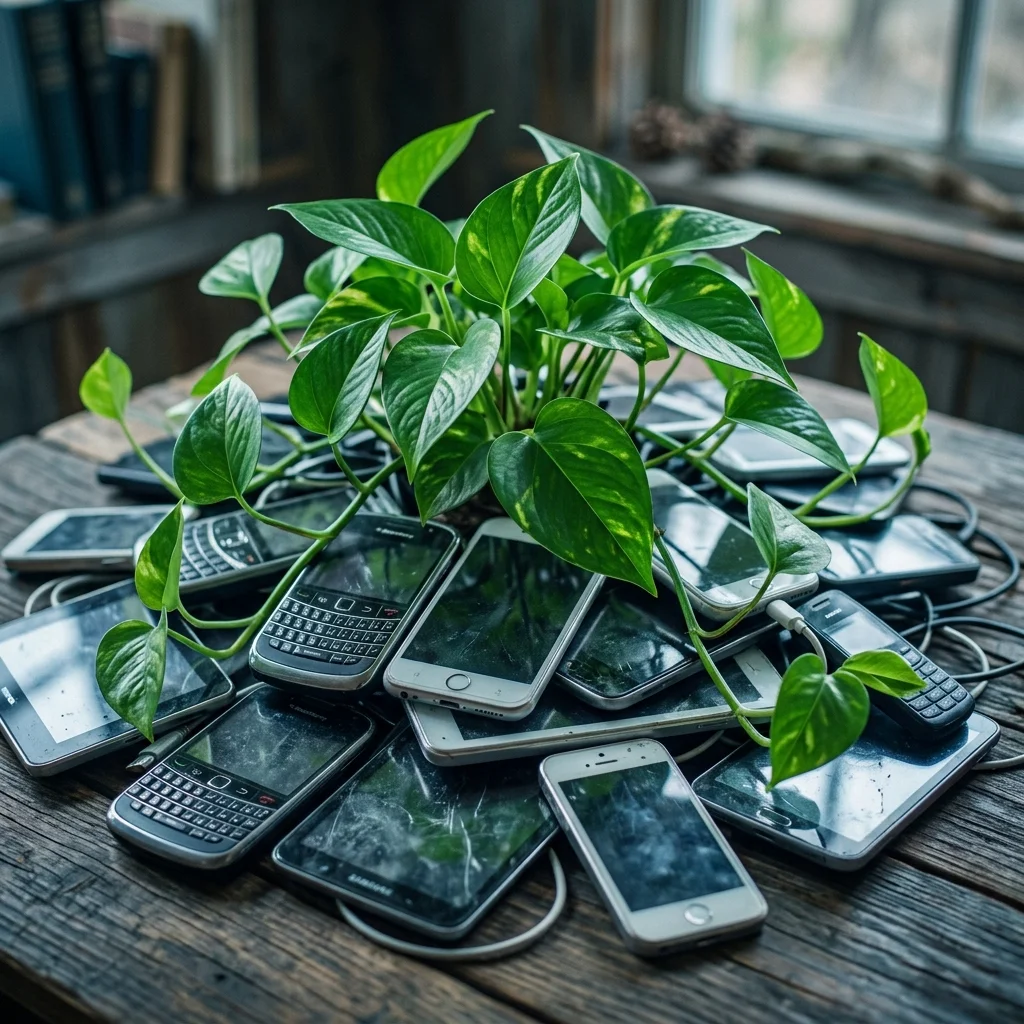
When a company decides to refresh its IT fleet, the first question is usually: how do we get rid of the old equipment? But that question starts from a mistaken premise. Getting rid of something means eliminating it, discarding it, consigning it to oblivion. And the reality is that the vast majority of retired corporate equipment has plenty of life left in it. It just needs a second chance.
At CircularIT® we believe that before recycling any device, every possibility for reusing computer equipment should be exhausted. Not out of idealism, but because it is the smartest thing to do from an economic, environmental and social standpoint. This article will show you why a second life for electronic equipment is not a marginal alternative but the heart of a truly circular technology strategy.
The second-life ecosystem: where does refurbished equipment go?
When a corporation retires a three- or four-year-old laptop, that device is still perfectly functional for millions of users and organizations that do not need the latest processors or graphics cards. Refurbished equipment in Mexico finds new homes in a diverse and vibrant ecosystem:
Small and midsize businesses (SMBs): for a growing SMB, buying refurbished corporate equipment means access to high-quality, durable hardware at a fraction of the price of a new device. A high-end business laptop, designed for intensive use, outperforms many new low-end devices in performance and reliability.
Educational institutions: schools, universities and training centers need working equipment for computer labs, digital libraries and training programs. A refurbished corporate device can serve these applications perfectly well for another three to five years.
Startups and entrepreneurs: when every peso counts, starting out with refurbished equipment frees up more capital for product development, marketing or hiring. It is a smart decision, not a compromise.
Emerging markets in Latin America: equipment that no longer meets a multinational corporation's refresh standards represents a significant upgrade for organizations in countries where access to technology remains a challenge.
Nonprofit organizations: foundations, NGOs and civil associations working in community development, health or education often operate with very limited technology budgets.
This ecosystem is not a linear chain: it is a network in which value circulates, where what one organization no longer needs becomes exactly what another was looking for. Used corporate computers, when they go through a professional refurbishment process, are reliable, productive tools.
The environmental case: extending useful life transforms the carbon footprint
Manufacturing a computer is the process with the greatest environmental impact in its entire lifecycle. Mineral extraction, component manufacturing, assembly and global distribution logistics add up to a significant carbon footprint before the device is switched on for the first time.
Extending a laptop's useful life by three additional years can reduce its total carbon footprint by up to 50%. That is because each additional year of use amortizes the environmental impact of the original manufacturing without creating demand to produce a new device. At a time when companies are seeking to cut their emissions and meet climate commitments, giving electronic equipment a second life is one of the actions with the greatest real impact per unit of investment.
The hierarchy of the circular economy in electronics is clear: reduce first, then reuse, and recycle only at the end. Recycling, although necessary when a device can no longer be used, recovers materials but destroys all the added value of manufacturing. Reuse, by contrast, preserves that value intact.
From waste to opportunity: your "obsolete" equipment is someone else's ideal tool
The word "obsolete" deserves serious questioning in the context of corporate technology assets. A device stops being useful to a corporation when it no longer meets the performance or security standards that specific organization requires. But that does not mean the device has stopped working or being productive.
A workstation with a four-year-old processor is still more than enough for office tasks, web browsing, email, video conferencing and most standard business applications. A server retired from a corporate data center can power an SMB's infrastructure for years. A batch of 24-inch monitors replaced by ultrawide displays can equip an entire computer lab.
The problem is not the technology: it is the narrative. When we stop thinking about "discarding old equipment" and start thinking about "transferring technology value," everything changes. Your retired equipment is not a disposal cost; it is an asset that can generate economic, social and environmental value.
The refurbishment process at CircularIT®: from your storeroom to a new user
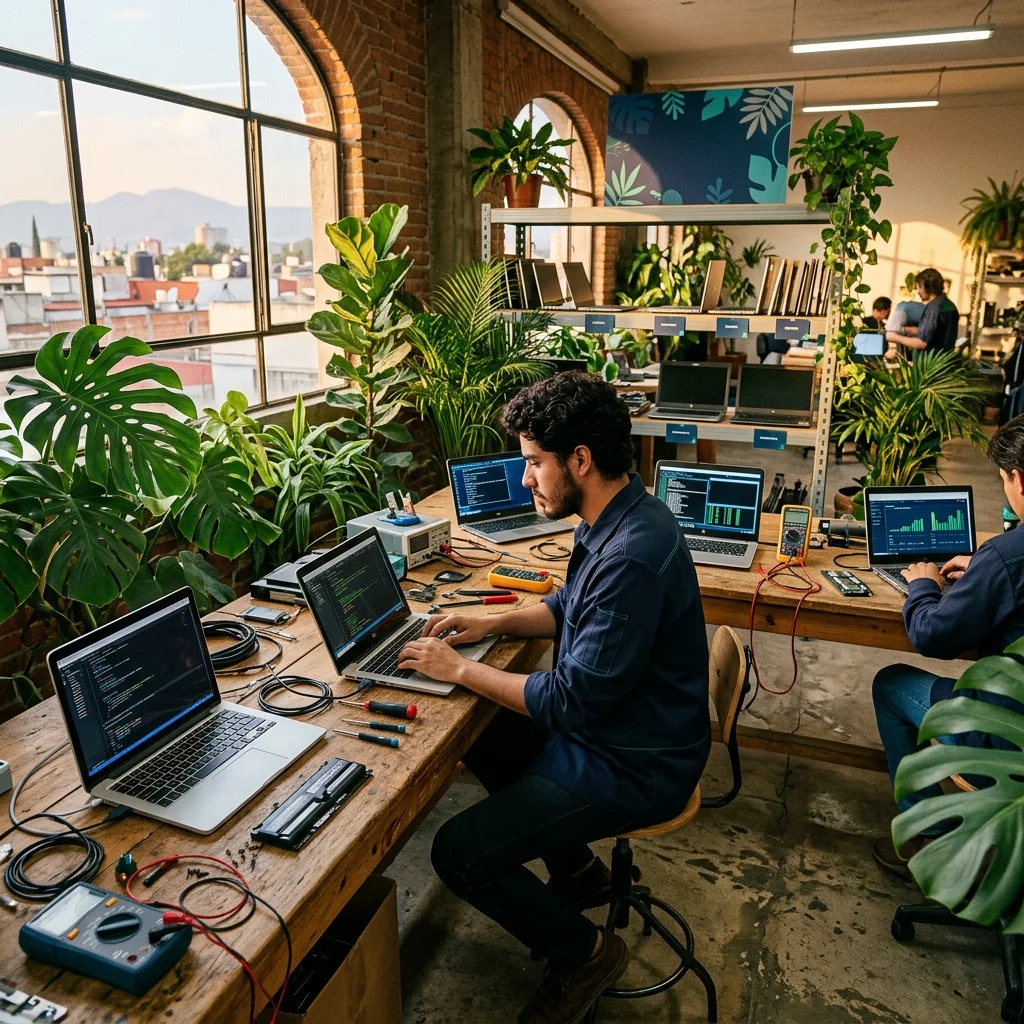
The difference between a used device and a professionally refurbished device is vast. At CircularIT® every device goes through a rigorous process before starting its second life:
Certified data erasure: every storage device is sanitized under the NIST 800-88 standard. An individual certificate is generated that guarantees the information has been irrecoverably removed. Your security and that of your clients are not negotiable.
Comprehensive diagnostics: each device undergoes exhaustive hardware testing: processor, RAM, storage, battery (in laptops), screen, ports, wireless connectivity and internal components. The actual condition of each component is documented.
Repair and upgrade: defective components are replaced. Where viable, upgrades are made, such as adding RAM or installing solid-state drives (SSDs), which can significantly extend useful life and improve the end user's experience.
Quality certification: the device goes through a final verification confirming that it meets defined performance standards. Only devices that pass this certification are considered fit for a second life.
Preparation for the new user: installation of a clean operating system, professional cosmetic cleaning and proper packaging. The device leaves with the confidence that it will work reliably.
This process is what sets professional equipment refurbishment apart from the simple resale of used equipment. Refurbished does not mean inferior: it means inspected, certified and backed.
Quality assurance: refurbished is not a synonym for discarded
One of the biggest obstacles to the adoption of refurbished equipment is the prejudice that it is low-quality or unreliable. The reality is exactly the opposite when refurbishment is done professionally.
Original corporate equipment is designed for intensive-use environments. Its build standards, materials and durability testing far exceed those of consumer equipment. A business-class laptop that has gone through a professional refurbishment process offers greater reliability than many new entry-level devices.
At CircularIT®, refurbished equipment comes with a warranty, which gives the buyer peace of mind and demonstrates the confidence we have in our process. Each device carries a documented history of diagnostics, repair and certification that backs its performance.
Social impact: technology that transforms communities
A second life for IT equipment has a dimension that goes beyond the economic and environmental benefit. When a refurbished device reaches a rural school, a community center or a digital skills program, it becomes a tool for social transformation.
In Mexico, the digital divide remains one of the main obstacles to educational and economic equity. Thousands of students have no access to a computer at school, much less at home. Donating company computer equipment or channeling it to social programs through second-life schemes creates a tangible, measurable impact in the communities that need it most.
Some of the equipment we process at CircularIT® goes to educational institutions and social programs. Not as a symbolic gesture, but as an integral part of our operation: every viable device deserves the opportunity to remain productive, and every community deserves access to working technology tools.
The circular economy in action: reduce and reuse before recycling
The circular economy applied to electronics proposes a paradigm shift: moving away from linear cycles of buy, use and discard and adopting systems in which resources circulate for as long as possible at the highest possible level of value.
In practice, this means recycling should be the last resort, not the first. Before shredding a device to recover its materials, we should ask ourselves: can this device keep working? Can someone else make use of this value? Is it possible to repair or upgrade instead of destroying?
CircularIT®'s second-life program embodies this principle. Every device we receive first goes through a reuse viability assessment. Only devices that genuinely cannot have a functional second life are channeled to responsible recycling. This prioritization is not just good environmental practice: it is the most efficient way to extract value from retired technology assets.
Relevance for ESG reporting: measurable, documentable impact
For companies that report under ESG (Environmental, Social, Governance) standards, a second-life program generates valuable metrics in all three dimensions:
Environmental: tons of CO2 avoided by extending the useful life of equipment, kilograms of e-waste diverted from landfills and materials that remain in productive use instead of being recycled prematurely.
Social: number of devices channeled to educational institutions and social programs, students benefited, communities reached and contribution to narrowing the digital divide.
Governance: documented chain-of-custody processes, data erasure certificates, full traceability of each asset's destination and compliance with environmental and data protection regulations.
This data is neither generic nor estimated: these are specific, auditable indicators directly attributable to the decision to give your equipment a second life. In a landscape where investors, clients and regulators demand transparency on sustainability performance, having these metrics is a real competitive advantage.
The CircularIT® commitment: every viable device deserves a second chance
Our philosophy is simple but firm: reuse before recycling. Every device that arrives at our facilities is assessed first for its second-life potential. Only when a device genuinely can no longer be functional is it channeled to responsible materials recycling.
This prioritization allows us to maximize value for our corporate clients (through financial recovery via remarketing), for the environment (by extending the useful life of devices) and for society (by facilitating access to working technology for those who need it most).
A second life for your IT equipment is not an abstract concept: it is a concrete practice that generates measurable benefits for your organization and for Mexico. What you see as a device that has completed its cycle, someone else sees as the tool they need to grow, learn or start a business.
Specialists in IT asset management and the circular economy in Mexico.
Give your IT equipment a second life
At CircularIT® we maximize the value of your retired technology assets through reuse, refurbishment and remarketing programs. Find out how to turn your equipment into economic, environmental and social impact.